


Lab Directors

Monique Deveaux, Professor of Philosophy and Tier 1 Canada Research Chair in Ethics and Global Social Change
Trained in political philosophy and comparative politics, I take a grounded or ‘engaged philosophy’ approach to studying injustices — especially poverty, exploitation, and cultural oppression. I am interested in rethinking structural injustices and their remedies from the vantage point of justice-seeking groups and their social movements.

Candace Johnson, Professor of Political Science
My research attempts to reconcile two sub-disciplinary areas within political science: political theory and public policy. Most of my published work entails the application of theoretical tools and frameworks to complex global reproductive rights issues; I am also committed to socially engaged feminist research, standpoint methodologies, community engaged collaborations, and transnational dialogue.

Leah Levac, Associate Professor and Tier 2 Canada Research Chair in Critical Community Engagement and Public Policy
My research program focuses on the intersections between critical community-engaged scholarship and public policy. I am interested in 1) exploring how community engaged scholarship (CES) can become more critical and attentive to the knowledges and practices of often-invisible communities; 2) fostering innovations in public policymaking through critical CES;
Read more
3) facilitating critical CES capacity-building. I am involved with a number of collaborative projects that consider how public policy-making processes and outcomes can be more attentive to the experiences and knowledges of invisible and hyper-visible communities, and welcome students working in these areas.
Current Lab Members
Amanda Buchnea, Ph.D. Candidate (Social Practice & Transformational Change)
I am a doctoral candidate in the interdisciplinary Social Practice and Transformational Change program under the supervision of Dr. Leah Levac. I have worked in the field of youth homelessness prevention research and policy advocacy since 2016, and I am the Strategy, Policy, and Innovation Specialist at the Canadian Observatory on Homelessness. My doctoral project is focused on the knowledge and practice(s) of community homelessness planning in Canada and the ways in which youth are in/excluded from planning and policy processes. My research aims to uphold commitments to intersectionality, critical community engaged scholarship, radical care and solidarity research, and policy-relevant theory. I am using a grounded normative theory approach to understanding the social practices, systems, and structures that hold (youth) homelessness in place and to identify pathways for collective action and transformation
Mirella Tranquille, Ph.D. Candidate (Philosophy)
My research centers on analyzing the Black American freedom movements of the 1970s and contemporary Black abolitionist coalitions. My principal objective is to develop an ethical framework that accurately reflects the social and political position of Black people as unfreed slaves. Ultimately, I aim to identify a theoretical framework that most effectively supports a revolutionary movement for Black liberation in the USA, focusing on the permissibility of violence.I am based in the Philosophy Department and working under the supervision of Dr. Monique Deveaux.
Rebecca Tatham, Ph.D. Candidate (Political Science & International Development Studies)
I am a doctoral candidate (ABD) in the collaborative Political Science/International Development program working under the supervision of Dr. Candace Johnson. My doctoral research is centered on understanding the gendered nature of extractive development and governance and community resistance in Guatemala. The empirical portion of my research embraces an interpretive feminist and community-based participatory research (CBPR) orientation, which prioritizes community engaged collaborations and centers the unique cultural perspectives of Indigenous activists to advocate for action on environmental and gender justice issues related to mining.
Fabian Garcia, PhD Student (Social Practice and Transformational Change & International Development Studies)
After sixteen years as part of the Ecuadorian Foreign Service, where I completed missions at the General Consulate in Hamburg, Germany, and the United Nations in New York, I joined the University of Guelph in 2022. I am part of the Social Practice and Transformational Change and International Development Studies collaborative program, as well as a collaborator with the Engendering Disability Inclusive Development partnership. I am interested in researching the practices of activists who, while advocating for the rights of nature, incorporate notions of both Critical Posthumanism and Indigenous Cosmologies to reimagine the subject, the community, and our relationships with the more-than-human world.

Sana Taha, M.A. Student (Public Issues Anthropology)
I am a graduate student in the Public Issues Anthropology program, with a focus on (im)migrants’ communities. With background studies in international relations and legal studies, and work experience with refugees and other vulnerable communities, my research focuses on the impact of discrimination against newcomers in the GTA area. My interests revolve around legal constraints which may impact newcomer communities, and which may influence favouritism and prejudice. My work aims at understanding and prioritizing the needs and interests of newcomers, in a way of improving their inclusion on social and cultural levels within their new communities.

Amie Presley, Ph.D. Student (Social Practice & Transformational Change)
I am a doctoral student in the Social Practice and Transformational Change program at the University of Guelph, supervised by Dr. Leah Levac. My current research interests include learning from Indigenous data-sovereignty frameworks and community-based participatory data stewardship models to critique current open-by default data landscapes – while also exploring community-based privacy and acts of surveillance and harm in the collection and use of public education data. With broader calls for direct youth participation in decision-making, my research hopes to further explore pathways for centering student and community voices in shaping public education policy. I have been working in applied research since 2008 and currently, work as a Senior Researcher at the Toronto District School Board and as a Visiting Scholar at York University’s Faculty of Education.

Nealob Kakar, Ph.D. Candidate (Social Practice & Transformational Change)
I am a Queer Afghan community-based researcher, storyteller, artist, and maker of all things. I am currently a doctoral candidate in the Social Practice and Transformational Change program under the supervision of Dr. Leah Levac. Through the use of arts-based interventions and the exploration of speculative abolition feminism theories I am researching the ways QTBIPOC Survivors practice care, mutual aid, and a praxis of indispensability for one another in ways that colonial bodies of policy have not been able to. My research aims to contribute to a body of knowledge that reconceptualizes the discipline of policy through critical community-based perspectives that rethink difference and radically re-imagine transformative futures of collective care.

Amy Kipp, Ph.D. Candidate (Social Practice & Transformational Change)
I am a postdoctoral research fellow with the Community Engaged Scholarship Institute, with a PhD in Social Practice and Transformational Change. Using community-engaged, creative, and feminist approaches, my research explores the social and spatial dimensions of care, wellbeing, and belonging across different scales. This includes social infrastructures that shape how care is provided and accessed in communities, such as mutual aid organizing and collective artmaking; shifting discourses and understandings of care in ‘more than local’ practices, like ethical consumption and global volunteerism; and community wellbeing in the context of social change, such as demographic shifts and public health challenges. My research also critically engages with care as a methodological and pedagogical approach. Through collaborative auto-methods, I think with other scholars to theorize from our everyday experiences of research, teaching, and learning to collectively imagine and make change towards a more socially just university system.

Morgan Flom, M.A. Student (Philosophy)
After working for seven years in the U.S. intelligence and defense communities and many more as a tech entrepreneur in the data analytics space, I am returning to school to study the intersection of AI technology and security policy and how that unholy marriage may impact us all. I am pursuing an MA and my research will focus on the ever-growing use of technology companies and their AI products being integrated into society and the security state. I will aim to create an ethical framework by which we can analyze the impact of the use of privately-owned large language models, lethal autonomous weapons systems, and automated or algorithmic targeting and data triage systems on democracy, civil rights, and just war.

Lilian Barraclough, Ph.D. Student (Social Practice & Transformational Change)
I am a Queer social and environmental justice activist, community-based researcher, and creative. I am currently a doctoral student in the interdisciplinary Social Practice and Transformational Change program under the supervision of Drs. Leah Levac and Karina Benessaiah. I have organized as an activist and worked as an environmental professional in the fields of climate change mitigation and adaptation, youth-organizing, active transportation, and climate justice for many years. My doctoral research is focused on understanding how knowledge from queer theory, queer ecologies, and 2SLGBTQIA+ lived experiences and communities can be integrated into climate policies and programs and help to dream and develop alternative sustainable futures through arts-based methods. My research seeks to transform how we conceptualize climate policy and futures through an approach grounded in intersectionality, critical community engaged scholarship, critical feminist and queer theory, and abolitionist worldbuilding. My past research has centered on the role of and experiences of youth climate activists within the climate movement and decision-making spaces, specifically exploring the mental and emotional impacts of the climate crisis, and the power of meaningful youth-adult partnerships in facilitating learning and sustainability transformations.

Annika Maldonado, M.A. Student (Practical & Political Philosophy)
I am a graduate student at the University of Guelph, pursuing an MA with a focus in Practical & Political Philosophy. My thesis research explores the negative impacts of wealth inequality and extreme wealth, and looks at arguments in favour of wealth caps for ultra-wealthy individuals as a possible way in which we might address urgent global issues. With a focus on regulatory efforts outside of taxation, my research explores other areas in which wealth caps and market regulation might be utilized to address issues requiring collective action.

Megan Marsh, M.A. Student (Political Science)
I am a graduate student in the department of political science, working to complete my MRP under the supervision of Dr. Candace Johnson. My research interests include Canadian approaches to healthcare policies and the influence on human rights, healthcare communication and creating an equitable delivery of services in comparison to European states. My MRP focuses on MAiD policy for mental health patients in Canada. My interests stem from previous work with various vulnerable populations. Through my research, I aspire to understand effective approaches to healthcare policy to better support vulnerable populations in Canada.

Devon Jones, M.A. Student (Philosophy with Interdisciplinary Collaboration in International Development Studies)
After having spent most of the last decade in the Global South volunteering, farming, contract sailing and listening I’ve returned to Canada to examine what I’ve observed through theoretical perspectives that guide how we approach participation in the development and implementation of digital technologies in the Global South. While acknowledging the history of sidelining meaningful participation in development contexts I am investigating the place direct democracy and participation have in a public sphere fractured by social media and large language models. Specifically, I am exploring how participatory mechanisms used in development contexts, now being adapted as participatory AI, can remain effective in a moment dominated by chatbots and algorithmically generated content.
Former Lab Members & Recent Graduates
Mahad Butt, B.A., Student (Philosophy)
My primary research interests are moral and political philosophy with consideration of how they entail contemporary issues to global justice, societal actions to laws, and public interactions that transform social and cultural institutions. In particular, I am concerned in the analysis of questioning political and social effects, often looking at the way in which moral questions play out on issues of fairness and cultural injustices advocated through a philosophical framework. My aim is to distribute a level of ethical values and adhere principles that hold cultural and political injustices responsible for marginalized communities.
Maral Jumayeva, Ph.D. Candidate (Political Science)
My name is Maral. I am a fourth-year PhD student at the University of Guelph. My research focuses on the implications of cross-sector partnerships on marginalized communities, and it is grounded in empirical data gathered through interviews and personal observations. It also involves testing existing theories about cross-partnerships and distributive justice through a comparative approach. My research prioritizes the interests of the service recipients and is aimed at improving the provision of services to the most marginalized communities.
Jacqueline Potvin, Ph.D., Former Postdoctoral Fellow in Political Science
I am a former postdoctoral researcher in the department of Political Science at the University of Guelph. My research examines the discursive construction of maternal, reproductive, and sexual health in Canadian development policy, including in Canada’s Feminist International Assistance Policy. My research is situated in the reproductive justice framework and interrogates how development policy acts as a site of medicalization, depoliticization, and global biopolitics. In particular, I am interested in analyzing how development policy acts as a site through which the reproduction of women and adolescent girls in the Global South is governed, and through which reproductive inequalities are at times reinforced.

Gordon Trenbeth, Ph.D. 2023 (Philosophy)
My research primarily involves engaging with solidarity, feminist, and post-human theory as a lens for film study, and applying this as a practical means of exploring solutions to multi-species and environmental ethical problems. I am especially interested in the analysis of more established political and normative philosophical frameworks via the intervention of more diverse theory as a way of challenging and improving our understanding of community membership from a multi-species perspective. I use film criticism as a means of grounding my analysis and understanding the cultural context of the theory.
Jeremy Wiens, M.A. 2023 (Philosophy & International Development Studies)
My primary areas of interest are political philosophy and applied ethics, particularly as they pertain to contemporary issues of global justice, public policy, and political economy. I am an advocate for the utility of interdisciplinary approaches to real-world problems, and my current research focus lies in an application of philosophical tools and frameworks to international development studies. My aim is to contribute tools and observations that can help inform the creation of new development paradigms that are sensitive to the mistakes of the past and resilient towards the shocks of the future.
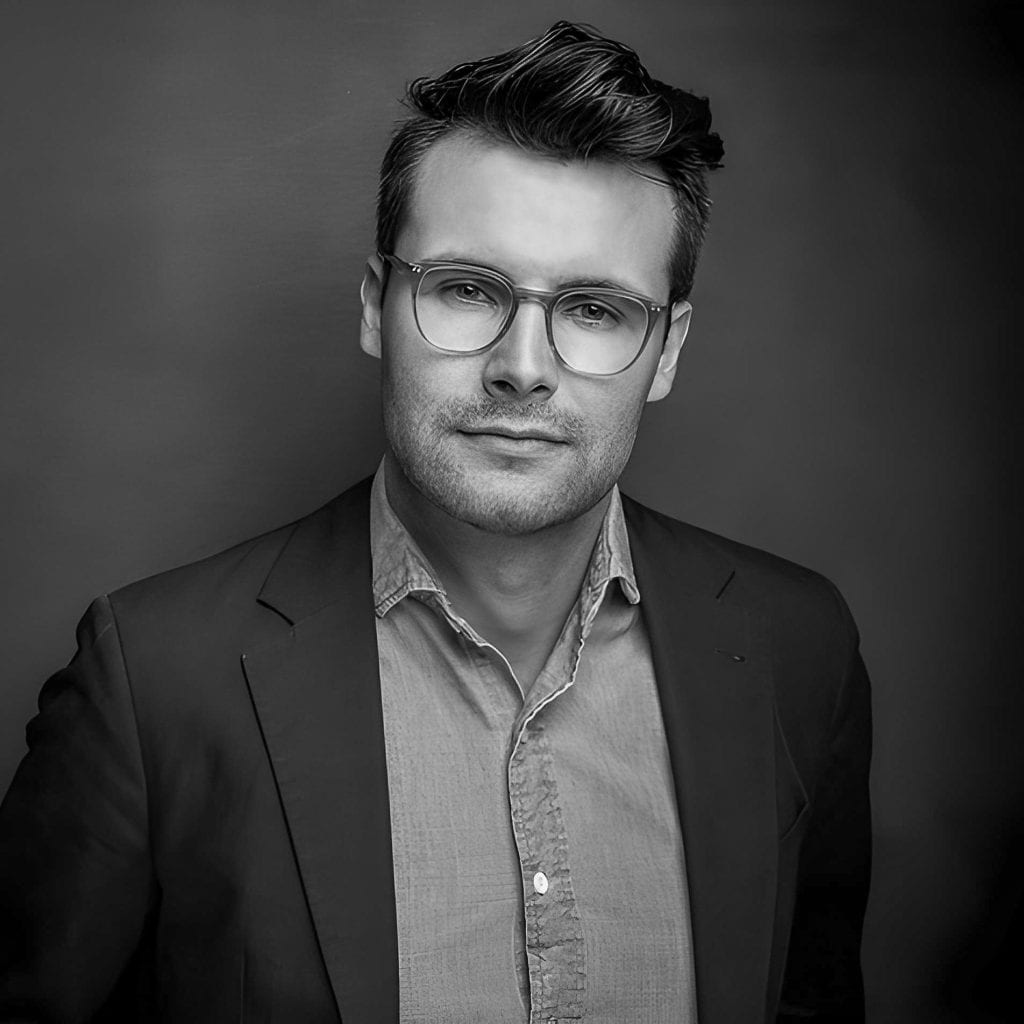
Ezra Karmel, Ph.D. 2022 (Political Science)
I was a PhD student in the Department of Political Science at the University of Guelph and a Senior Innovator at Proximity International’s Innovation Lab. My research draws on grounded theory to explore policy making, local governance, and civil society in authoritarian contexts. I’ve conducted most of my research in the Middle East.
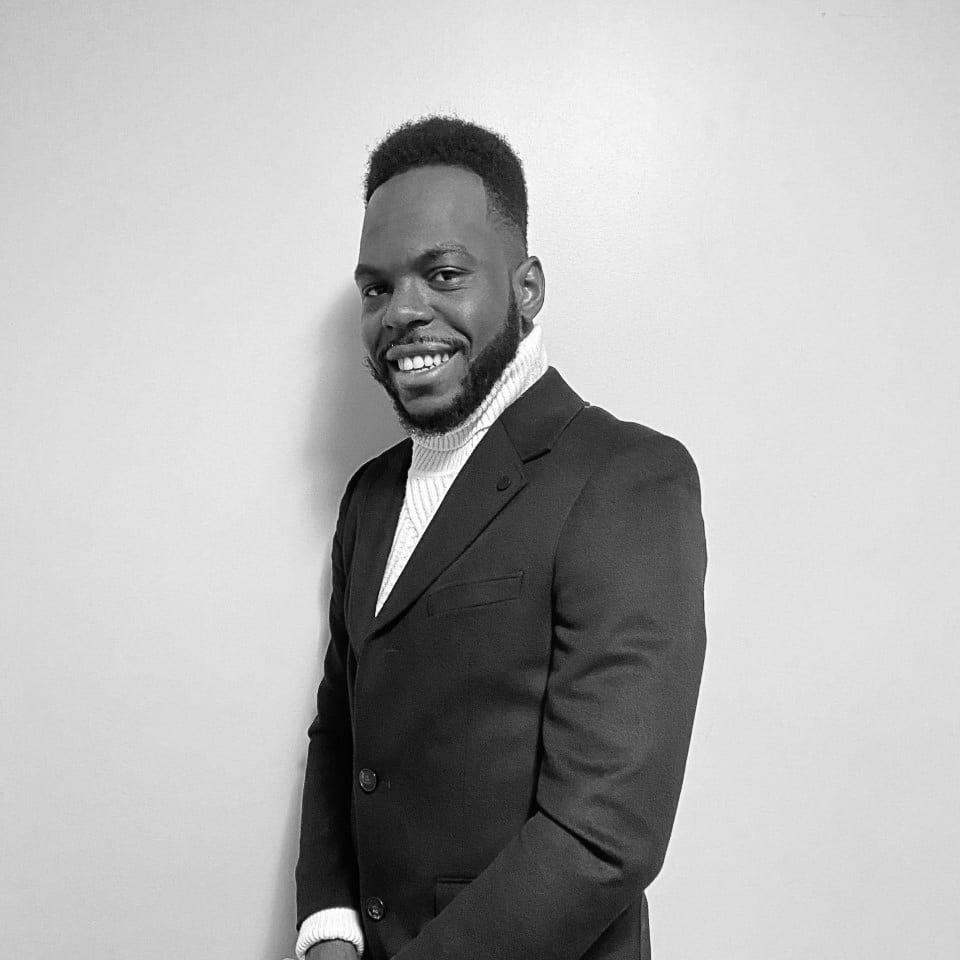
Olubiyi Mark Ariba, M.A. 2022 (Political Science)
My primary areas of research are political theory and public policy, particularly as they interrogate contemporary issues of representation, norms and social policy. My research engages with a broad interdisciplinary framework including quantitative analysis that seeks to transform political theory into an actionable and practical tool that engages with pressing social problems. My current research studies the role of descriptive representatives in the broadening of public policy debates. My aim is to analyze how social policy driven by descriptive representation can reproduce structural inequities and counterintuitively narrow the proffered solutions to issues that affect marginalized communities.

Shannon Boss, Ph.D. 2022 (Philosophy)
My research examines the ways in which diet discourses in the North American context construct “healthy” and “clean” foods and subjectivities. By considering what is at stake in what and how we eat, I offer insight into how power underpins and permeates our foodscapes today and the ways in which we fashion ourselves within them.

Cameron Fioret, Ph.D. 2021 (Philosophy)
I am a policy analyst in the Energy Policy Branch of Natural Resources Canada. I specialize in Social, Political, and Environmental Philosophy, as well as Water Ethics and Justice. I utilize engaged theory in my research to expand deliberative democracy to normative concerns of water, identify political harms of water commodification (such as a lack of democracy in a state), and show how grassroots community water activism can prevent or outlaw water injustices through the ‘commoning’ of water.

Marie-Pier Lemay, Ph.D. 2021 (Philosophy & International Development Studies)
I am an Assistant Professor (Teaching Stream) in the Philosophy Department of Carleton University, Ottawa. Previously, I was a postdoctoral scholar, funded by the Social Sciences and Humanities Research Council and the Fonds de Recherche du Québec-Société et Culture, at the University of Pittsburgh, working in the Department of Political Science, alongside the Global Studies Center and the Gender, Sexuality, and Women’s Studies Program. I completed my PhD in philosophy and international development studies at the University of Guelph, Ontario. My research revolves around the challenges of practicing solidarity in contexts of pronounced power inequalities and resistance to gender-based violence.
Personal website

Gloria Novovic, Ph.D. 2021 (Political Science & International Development Studies)
I hold a PhD in Political Science and International Development from the University of Guelph (2021) and specialize in decolonial feminist approaches to global governance. My research is informed by decolonial feminist and development theories and operationalized through interpretive policy critique. My doctoral research examined gender equality commitments of the 2030 Agenda for Sustainable Development across systems of development actors in Kenya, Rwanda, and Uganda, and engaged participants in problem re-interpretation, knowledge generation, and research validation processes. I am passionate about interlinkages between policy and social change and am currently engaged in projects that aim to redefine international solidarity.

Christi Storfa, Ph.D. 2021 (Philosophy)
My research argues that existing normative models of global justice cannot readily help us address problems of global justice until they fully grasp the interdependency and shared vulnerability of human beings (ecosystems) across borders. In response to these failings of mainstream global justice theory, I develop a future-oriented normative framework that could support policy makers in analyzing and regulating unfolding global emergencies such as extreme poverty, mass migration, and climate change.